

advertisement
Did you know that students often forget up to 80% of what they learn within a month? This staggering statistic highlights a critical issue in education: the effectiveness of our learning methods. Many believe that simply repeating tasks leads to mastery. However, the quality of practice plays a vital role in long-term retention.
Varied practice is a powerful approach that encourages learners to engage with different skills and topics in diverse ways. By changing conditions, examples, and strategies, students face challenges that promote deeper understanding. This method may feel more demanding, but it ultimately leads to stronger knowledge retention and application.
When students can apply their knowledge in new situations, it reflects a true measure of learning. Unlike the quick gains from repetitive methods, varied practice fosters flexible thinking and problem-solving abilities. In this article, we will explore the science behind context variation, the benefits of mixing practice, and practical strategies for educators and learners alike.
Understanding Varied Practice and Its Role in Flexible Learning
Understanding how students remember information is crucial for effective teaching. One approach that enhances retention is known as varied practice. This method involves repeated work on a skill or concept under changing conditions, rather than repeating the same task in a fixed order. It requires learners to adapt to different contexts, which fosters a deeper understanding of the material.
Variation in practice can include using different examples, environments, materials, or even levels of difficulty. For instance, a student might solve math problems in various formats or apply scientific concepts in real-world scenarios. This approach not only keeps learners engaged but also helps them connect ideas across different contexts.
From a learner’s perspective, the goal is to retain knowledge long after a test. Students desire to apply concepts independently, especially in unfamiliar situations. On the other hand, educators aim to equip students with the skills necessary for real-world applications.
Although varied practice may feel more challenging than repetitive practice, it ultimately strengthens learning. Each time a learner encounters a new problem, they must identify the issue, select a strategy, and retrieve relevant information. This process enhances their cognitive abilities and promotes flexible thinking.
Context variation is key to building flexible knowledge. By linking a concept to multiple situations, students can better navigate complex problems. Unlike massed or interleaved practice, which focus on timing and skill mixing, varied practice emphasizes the conditions under which skills are applied.
In summary, varied practice, spaced practice, and interleaved practice can all complement each other in a successful learning plan. Together, they create a robust framework that enhances retention and application of knowledge.
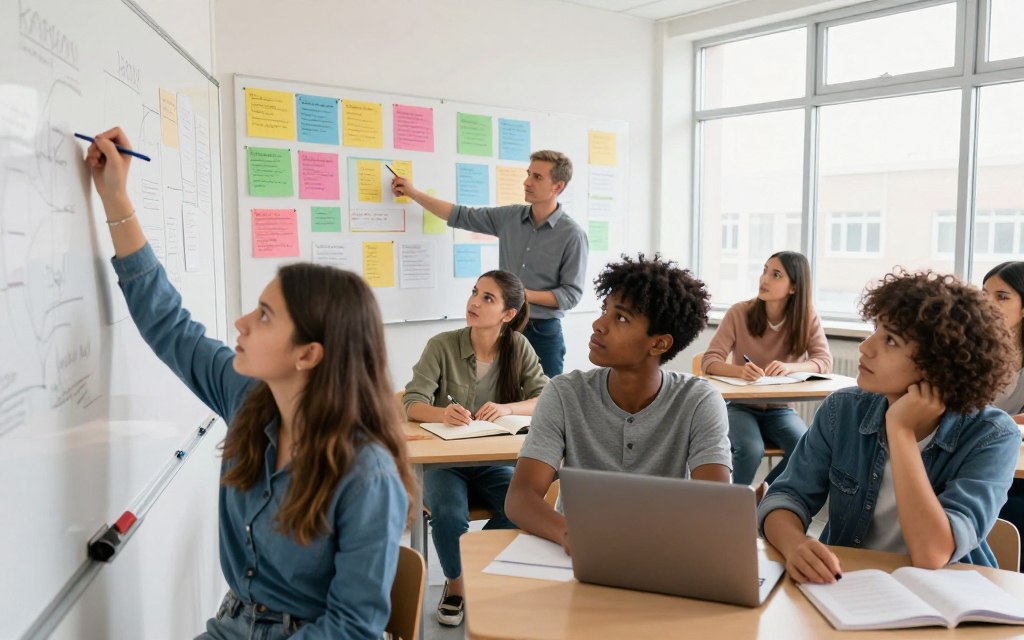
Key Types of Practice and How They Influence Learning
Different approaches to learning can lead to varying levels of knowledge retention among students. Understanding the strengths and limitations of each method can help educators and learners choose the best strategies for their needs.
Massed Practice vs. Distributed Practice
Massed practice involves concentrating repetitions of a specific skill or action in a short time frame. For example, a student might repeatedly serve a tennis ball without breaks. This method can lead to quick performance gains, but it often results in shallow processing and faster forgetting.
In contrast, distributed practice breaks learning into intervals, allowing for rest and reflection. This approach is beneficial for complex tasks, such as aviation or football, where feedback and retrieval are crucial for long-term retention.
Fixed Practice and Its Best Uses
Fixed practice focuses on whole-skill repetition in a stable environment. This method is effective for predictable activities like swimming, reading, or golf. By practicing the entire skill without breaking it into parts, students can develop consistency and confidence.
Interleaved Practice: Mixing Skills for Stronger Mastery
Interleaved practice involves mixing different skills or topics during learning sessions. For instance, a student might alternate between solving volume problems related to cubes, cylinders, and spheres. This approach helps students build connections between concepts and enhances their ability to adapt their knowledge.
Varied Practice: Applying Skills Across Changing Contexts
Varied practice is the most flexible method, requiring learners to adapt familiar skills to new conditions. This approach encourages students to choose appropriate strategies based on the context, leading to deeper understanding and application of knowledge.
Examples of Varied Practice in Real-Life Contexts
Real-life scenarios can provide excellent opportunities to showcase the benefits of context variation in learning. Understanding how to apply knowledge in diverse situations is crucial for students. This section will explore examples from sports, cooking, and classroom strategies to illustrate the concept.
Sports: Closed and Open Skills
In sports, skills can be categorized as either closed or open. Closed skills are isolated movements that can be practiced in a controlled environment. For example, a player might practice a free throw in basketball without any distractions.
On the other hand, open skills are influenced by the environment. For instance, dribbling past a moving defender requires quick thinking and adaptability. While static drills help build mechanical control, athletes must face realistic variations to respond effectively to changing opponents and conditions.
Cooking: Building Creative and Transferable Skills
Cooking provides a great example of varied practice. When a chef practices cutting, stirring, blending, and basting across different recipes, they develop creativity rather than just memorizing steps. This flexibility is essential as ingredients and kitchen conditions often vary.
For instance, cooking can become an open-skill activity when dealing with different textures, flavors, and equipment. Chefs must adapt their techniques based on the unique challenges presented by each dish.
Classroom Strategies: Enhancing Retention and Application
In the classroom, varied practice can enhance retention and application of knowledge. For example, students might alternate between solving volume problems involving cubes, cylinders, and spheres. This approach forces them to identify the shape before selecting the correct formula, reinforcing their understanding of geometric concepts.
Teachers can also revisit previously covered content, such as science topics or data analysis, over several weeks. This strategy strengthens retrieval and application, ensuring that students retain what they have learned.
| Skill Type | Definition | Example |
|---|---|---|
| Closed Skill | Isolated movements practiced in a controlled environment. | Practicing a basketball free throw. |
| Open Skill | Actions shaped by a changing environment. | Dribbling past a moving defender. |
| Cooking Skill | Techniques adapted based on varying ingredients and conditions. | Adjusting a recipe based on available spices. |
| Classroom Skill | Application of knowledge across different contexts. | Solving volume problems for various geometric shapes. |
How Educators and Learners Can Apply Varied Practice Effectively
Effective learning requires a thoughtful approach to how skills are practiced. Educators and learners can implement varied practice to enhance retention and application of knowledge. Here are some strategies to consider.
Designing Practice Sessions for Long-Term Retention
Start by establishing clear learning goals. Determine whether the focus is on mechanical accuracy, conceptual understanding, or long-term retention. This clarity will guide your approach.
Short periods of massed or fixed practice can introduce new skills effectively. For example, a student might practice a specific formula repeatedly before transitioning to more varied contexts. This initial focus helps build a solid foundation.
Balancing Practice Types According to Learning Goals
Mixing different types of practice is essential. Use distributed practice for complex tasks, allowing time for reflection and retrieval. This strategy helps students reinforce their learning over time.
Integrate related topics into warm-ups or homework. This encourages learners to apply the right strategies across various contexts, enhancing their problem-solving skills.
Encouraging Motivation and Problem-Solving Through Variation
Gradually increase variation in practice. Change settings, materials, or difficulty levels while keeping challenges achievable. This keeps students engaged and motivated.
Provide specific feedback on their efforts. Celebrating productive attempts fosters confidence and encourages students to explain their chosen methods. This reflection deepens their understanding and enhances their ability to adapt.
| Practice Type | Best Use | Example |
|---|---|---|
| Massed Practice | Initial skill introduction | Repetitive drills for a new formula |
| Distributed Practice | Complex tasks over time | Reviewing math concepts weekly |
| Interleaved Practice | Discrimination among skills | Alternating between geometry problems |
| Varied Practice | Real-world application | Applying knowledge in different scenarios |
Conclusion
The way we learn significantly impacts our ability to apply knowledge effectively. Varied practice helps students connect skills and knowledge to multiple situations. This connection makes application easier when conditions change.
Durable learning relies on retrieval, spacing, context variation, and meaningful problem-solving. Relying solely on repetition is not enough. While massed practice can build initial familiarity, it should not be the only method used.
Educators are encouraged to combine fixed, distributed, interleaved, and varied practice based on the task and desired outcomes. Students may find it challenging when topics and conditions change, but this desirable difficulty supports stronger long-term memory.
To build flexible mastery, practice skills in various ways, revisit them over time, and apply them in realistic situations.