
advertisement
Americans check their phones almost every 10 minutes. This adds up to 3–4+ hours of screen time daily for many adults. This shows how small actions can lead to big time commitments.
Smartphones are not just simple tools. They use notifications, app interfaces, and haptic cues to keep us engaged. An alert leads to a check, a swipe, and a click. This cycle shapes how we use our phones in ways we often overlook.
Think about it: frequent unlocks, constant push notifications, and designed interfaces push us to use our phones more. This affects our attention, productivity, sleep, and relationships. It also helps companies like Apple and Google make money through ads and in-app purchases.
This article will dive into how smartphones shape our behavior. You’ll learn how notifications and rewards shape our habits. We’ll also discuss signs of digital overuse and offer ways to change our phone use and take back control.
Understanding Smartphone Behavior and Its Impact
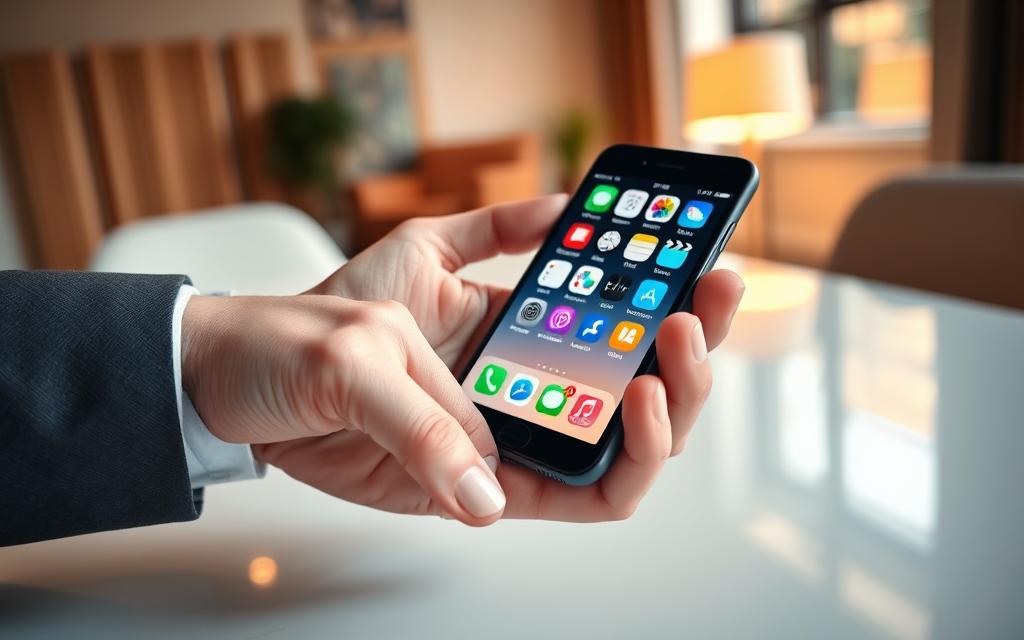
How we reach for our phones tells a story. It’s about attention, habit, and our surroundings. Researchers at Stanford and behavioral economists have found patterns in our phone use. These patterns show how our phones shape our daily lives.
The Psychology Behind Your Phone Use
Habit formation is simple: cue, routine, reward. Things like being on a commute or sitting at a table trigger us to check our phones. The chance of getting a reward makes us keep checking, even if it’s not always the same.
Attention is something we can’t keep forever. Every time we check our phone, it takes away from our ability to focus. Young people and professionals have different phone use patterns. This shows how important it is to understand who we are when we’re online.
How Alerts Shape Our Attention
Notifications are like cues in a game. They interrupt us with sounds, previews, and vibrations. The excitement of getting a notification makes us want to check it right away.
Designing notifications can affect how much time we spend on our phones. Even though iOS and Android offer ways to control notifications, many people don’t use them. Looking at how we interact with our phones helps us understand why we get distracted so easily.
The Feedback Loop: How Phones Influence Habits
Smartphones shape our daily routines through small, repeated actions. These actions teach us what gets our attention. They show how notifications lead to quick checks, creating habits that feel automatic.
Immediate Rewards: The Nature of Notifications
Notifications offer quick rewards like messages or likes. They give us instant validation, useful info, or a quick entertainment fix. This instant gratification makes us check our phones again.
Notifications fall into different types. Social alerts include texts and likes on platforms like Facebook. Informational alerts are news updates and reminders. Transactional alerts come from banks and delivery services.
Timing and content of notifications vary. They are timed and worded to grab our attention. Platforms test different messages to see what works best.
Long-Term Effects on User Behavior
Receiving rewards over time creates lasting habits. Checking phones becomes a reflex. Many people grab their phones without thinking, showing a change in behavior.
Behavioral drift shifts our time from offline to online activities. Reading and hobbies lose time to phone checks. This change affects our sleep, focus, and productivity.
Personalization makes the loop stronger. Algorithms learn our preferences and tailor content for us. This personal touch keeps us engaged for longer, affecting everyone’s phone use.
At a larger scale, we expect instant replies. Work boundaries blur as we’re always available. Our social norms around responding quickly change with these new norms.
The Role of Apps in Shaping Your Experience
Apps guide our attention and routines through design and social mechanics. By tracking how we use our phones, we learn what developers aim to achieve. This analysis shows how apps encourage us to spend more time and come back often.
Design choices that keep you engaged
Infinite scroll and autoplay make it easy to keep watching. They remove natural breaks, leading to longer sessions. This changes how we use our phones.
Push notifications and timed prompts bring us back to apps. Onboarding flows that ask for many permissions at once help apps send personalized nudges later.
Gamification, like streaks and badges, creates a loop of action and reward. Social proof, like likes and shares, makes us want to repeat our actions.
Growth teams at big apps like Instagram and YouTube focus on engagement. This can raise questions about ethical design. Tools like Apple’s Screen Time and Google’s Digital Wellbeing try to balance things out.
Social media and the quest for likes
Likes and comments boost our desire to post again. These small rewards shape how we use our phones across different groups.
Algorithms favor content that gets reactions. This means sensational posts spread faster than thoughtful ones. This is clear in trending feeds.
Features like TikTok’s For You feed and Instagram’s Reels aim to keep us engaged. They show us content that gets the most attention.
Social pressure and FOMO can change how we post. Platforms are testing ways to reduce harm, like hiding like counts and content warnings.
| Feature | Primary Effect | Example Platforms | Mitigation Tools |
|---|---|---|---|
| Infinite Scroll | Eliminates stopping cues; increases session length | TikTok, Instagram | Time limits, scroll reminders |
| Autoplay | Reduces decision effort; boosts playtime | YouTube, Facebook | Autoplay toggle, mobile data settings |
| Push Notifications | Drives re-engagement; shapes daily return rate | Twitter, Instagram | Notification controls, scheduled quiet hours |
| Gamification | Encourages habit formation through rewards | Snapchat streaks, Duolingo | Optional reward opt-outs, reduced visibility |
| Algorithmic Feeds | Promotes high-engagement content; reinforces biases | TikTok For You, Facebook News Feed | Content warnings, transparency tools |
| Social Metrics | Provides social validation; increases posting | Instagram likes, Facebook reactions | Hide like counts, limit comments |
The Science of Addiction: Are We Hooked?
Phones have a way of pulling us in, thanks to how our brains react to rewards. This guide explores the patterns and brain chemistry behind it. You’ll learn to spot signs and understand dopamine’s role in our phone habits.
Digital Addiction: Signs and Symptoms
Technology addiction has its own criteria. Look for signs like being obsessed with your phone, having trouble stopping, and using it despite harm. Feeling irritable or restless without your phone is another red flag.
Other signs include compulsive checking, skipping important tasks, and poor sleep from late-night scrolling. Feeling anxious when your phone is away is also a sign. It’s important to note that occasional heavy use is different from constant, harmful use.
Experts often compare phone addiction to impulse-control issues. While it’s not officially listed in all manuals, it’s a growing concern. Severe cases are treated with behavioral strategies.
The Role of Dopamine in Smartphone Use
Dopamine is key in how we respond to rewards. Getting a message or finding new content triggers dopamine. This release makes us want to do it again, shaping our phone use.
Variable rewards, like new likes or comments, are more powerful than steady ones. This makes it hard to break the cycle of checking your phone. Changing your environment and app design can help.
| Sign | Observed Effect | What to Watch For |
|---|---|---|
| Preoccupation | Mental focus shifts to phone even when engaged elsewhere | Frequent daydreaming about messages or content |
| Failed Attempts to Cut Back | Repeated short-lived reductions in use | Plans to limit screen time that don’t stick |
| Continued Use Despite Harm | Impact on work, school, or relationships | Missed deadlines, arguments, or reduced performance |
| Withdrawal-like Symptoms | Irritability, restlessness, or anxiety when apart from phone | Agitation during brief periods without access |
| Sleep Disruption | Later bedtimes and poorer sleep quality | Use of phone in bed, daytime tiredness |
Strategies to Break the Cycle
Changing how we use smartphones starts with simple steps. Making small changes to our phone habits can make a big difference. Here are some tools and routines to help you focus better and use your phone in a healthier way.
Use tools like iOS Screen Time or Android Digital Wellbeing to limit app use and schedule downtime. Apps like RescueTime or Moment can also track your phone use and remind you to stay on track.
Try simple rules that work for you: no phones during meals, the first hour after waking, and before bed. Set limits on social media apps and use grayscale mode to make them less appealing.
Move apps you don’t need often to a different screen. Turn off unnecessary notifications and keep your phone away during work or sleep. Also, agree with others on when you’ll respond to messages to avoid feeling pressured.
Mindfulness and reducing distractions
Focus on one task at a time and check your messages at set times. Use the Pomodoro method to work in focused blocks and get more done.
Practice mindfulness with short meditation or breathwork sessions. Notice when you want to check your phone and pause. This habit helps you become more aware and less likely to mindlessly check your phone.
Find alternatives to phone use, like reading a book or using a paper to-do list. These changes help you rely less on your phone and change your habits.
Start making changes slowly and track your progress. Small, consistent changes are often more effective than trying to change everything at once. Use insights from your phone use to celebrate your successes and fine-tune your habits until they feel natural.
The Influence of Notifications on Daily Life
Notifications affect how we feel, think, and act every day. A small alert can distract us from work, talking, and rest. Understanding their impact helps us reduce stress and stay focused.
Start by checking which apps interrupt you the most. Look at messaging apps, social networks, and news feeds first. Mark important services like banking, calendar, and health apps as high priority. Use data to guide your choices, not habit or guilt.
Customizing Alerts to Minimize Stress
Begin with a simple checklist to trim noise.
- Identify top alert senders and decide whether each is essential.
- Disable non-critical push notifications from games and many social apps.
- Limit lock-screen previews so sensitive content does not draw instant attention.
- Mute large group chats and set alerts to appear only for mentions or direct messages.
- Enable notification summary features like iOS Notification Summary to batch non-urgent items.
Adopt notification hygiene to reduce the urge to check devices. Batch notifications into set times. Use VIP lists for close contacts. Prioritize alerts by context, separating work and personal channels. These moves change smartphone behavior by cutting repeated cues that reinforce checking habits.
Psychological benefits appear quickly. Fewer interruptions reduce stress and improve sustained attention. People report less task-switching and a lower compulsion to glance at the screen. For more on interruption effects and measured cognitive impact, read a detailed summary from research on how notifications slow processing at notification-driven distraction.
The Importance of Do Not Disturb Mode
Do Not Disturb and Focus modes act as automatic guards against frequent disruption. Both iOS and Android let you schedule quiet periods and allow specific exceptions. Create profiles for work, sleep, driving, and family time to match daily routines.
Set DND to engage during meetings and nightly hours to protect sleep quality. Allow repeated-call exceptions or emergency contacts so urgent calls still get through. Scheduling reduces decision fatigue by automating boundaries, which helps device engagement behavior shift from reactive to intentional.
| Action | What to Change | Expected Benefit |
|---|---|---|
| Audit Notifications | Review alert volume and source weekly | Clear view of apps that drive checking frequency |
| Disable Non-Critical Alerts | Turn off push for low-value apps | Fewer interruptions, improved focus |
| Batch and Summarize | Use Notification Summary or scheduled digests | Reduced context switching, lower stress |
| Use VIP Lists | Allow key contacts to bypass silences | Essential calls reach you without constant noise |
| Schedule DND | Create profiles for work, sleep, driving | Preserved attention and safer behavior while driving |
Tracking how changes affect your routine reveals patterns in mobile phone user behavior. Focus on reducing notification frequency and checking, not just screen time. That shift better addresses the drivers of distraction and supports healthier smartphone behavior.
How Smartphone Behavior Affects Relationships
Everyday phone habits change how we listen, respond, and connect. These changes affect our conversations at home and work. They also impact how present we feel with each other.
The impact of distraction on communication
Phubbing, or phone snubbing, happens when someone ignores the person in front of them to look at their phone. Studies show it can make relationships less happy and make people feel less connected. It breaks up conversations and messes up the natural flow.
When we’re not fully present, we feel less empathy. Our conversations become shallow. Over time, this can lead to feelings of being ignored and more fights.
Workplace distractions are similar. Constantly checking phones makes meetings less effective and teamwork harder. It also makes work-life balance harder when work messages come in at home.
Fostering healthy digital interactions
Setting simple rules can help us connect better. Try making phone-free zones like the dining table. Also, have phone-free times, like date nights. Agree on phone use in shared spaces to avoid conflicts.
Use technology with purpose. Plan video calls for deep conversations and save messaging for practical stuff. Share when you’re available so others know when to expect a reply.
Tools like shared calendars can help without constant messaging. Use read receipts or status updates only when needed to avoid feeling pressured.
Talk about your limits and check in on them often. Explain why you’re cutting down on phone use and agree on expectations. Clear communication about phone use helps keep relationships strong.
Examining the Effects on Mental Health
Smartphones affect our moods in small but significant ways. Studies show that too much screen time and social media can lead to anxiety and loneliness in young people. Doctors now ask about phone use when checking for mood or sleep issues.
Anxiety and Isolation in a Hyper-connected World
Seeing others’ perfect lives online can make us feel bad about ourselves. Being exposed to bad news and using screens late at night can mess up our sleep. This can make us worry more and feel down.
Just because two things happen together doesn’t mean one causes the other. How we feel and who we have around us matters a lot. Looking at how we act online can help us understand ourselves better, but we should be careful not to jump to conclusions.
Finding Balance in a Digital Life
There are ways to make our digital lives healthier. Keeping phones out of the bedroom before bed helps us sleep better. Choosing what news we see and avoiding accounts that upset us can reduce stress. Taking breaks from our screens during the day can help us stay focused and feel better.
If our phone use is hurting our work, school, or relationships, it’s time to get help. Therapists use what they learn about our phone habits to help us. They teach us strategies to deal with the problems phones can cause.
Doing things with people face-to-face and staying active can keep our minds healthy. Programs in schools and at work that teach about digital responsibility can help everyone stay safe online.
The Future of Smartphone Behavior
Changes in hardware and software will change how we use our phones. We’ll see more AI, better augmented reality, and links to wearables and IoT. These changes will make our phone use smoother and more aware of our surroundings.
New trends focus on attention, privacy, and health. Short videos and feeds keep us coming back. Sensors and better batteries open up new ways to interact.
There’s a growing need for data privacy and clear algorithms. This will lead to changes in how platforms work. Companies like Google and Apple are adding tools to help us stay healthy.
These tools aim to encourage better habits. They include digital wellbeing dashboards and Focus modes. Researchers are studying how these tools affect our mental health, as seen in a study on smartphone behavior research.
There’s a balance between personalized services and ethical design. If we focus too much on grabbing attention, it could harm us. AR and VR might make us more disconnected and addicted.
Designers and policymakers can make a difference. By focusing on wellbeing, we can change how we use our phones. We need to test new ways to use our devices and measure their impact.
| Trend | Short-Term Impact on Use | Potential Mental Health Effect |
|---|---|---|
| AI-driven personalization | More relevant feeds, higher session frequency | Risk of echo chambers and compulsive checking |
| AR/VR integration | Immersive experiences, longer engagement bursts | Possible dissociation and reduced offline attention |
| Digital wellbeing features | Greater user control, lower passive use | Improved sleep, reduced anxiety when adopted |
| Privacy and regulation | Transparent controls, shifted business incentives | Lower stress from clearer consent and data use |
| Wearables and IoT links | Continuous context-aware prompts | Enhanced monitoring for interventions, privacy trade-offs |
Tips for Mindful Smartphone Use
Small changes can make a big difference in how you use your phone. Set clear goals to change your phone habits. The tips below are simple and can be added to your daily routine.
Phased detox options
Start with a 24–48 hour detox to focus better. If that’s too hard, try a weekend detox or short daily breaks. These small steps help you build lasting habits.
Practical swaps
Swap scrolling for walking, journaling, or calling a friend. Use an e-reader for long reads to keep tasks separate. These swaps make it easier to use your phone wisely.
Track and reflect
Use Screen Time or Digital Wellbeing to find problem apps. Set goals and track your progress weekly. Reflecting helps you make real changes in your phone use.
Fallback plans
If detox is too hard, disable notifications from top apps. Start phone-free meal times to improve focus. Small steps make new habits easier.
Set an intention
Know why you’re picking up your phone before you do. It could be to check a message or make a call. This habit helps you avoid mindless scrolling.
Design positive routines
Plan times for social media and keep content lists up to date. Unsubscribe from unwanted messages and use timers. These habits help you stay mindful of your phone use.
Privacy and security
Check app permissions and limit data access. Enable two-factor authentication for important accounts. A focus on privacy keeps your info safe and promotes responsible phone use.
Share and model
Discuss phone habits with family and friends. Show them how to use their phones wisely. Sharing tips can help change how everyone uses their devices.
Conclusion: Awareness Is Key to Healthy Use
Smartphones influence our choices in subtle ways. Design, notifications, and rewards shape how we use our phones. The key is to be aware of these factors and make small changes to use our phones better.
Embracing Positive Smartphone Habits
Begin with simple actions: sort notifications, have phone-free times, and check your phone mindfully. Use tools on iOS or Android to track and limit your use. These steps help you see progress and keep your changes going.
Taking Control of Your Digital World
Review your apps and set limits that match your values. Use phone settings and social rules, like no phones at dinner, to create new habits. Push for apps and platforms that help your focus and mental health. By being mindful and taking small steps, you can use technology wisely and improve your life.