
advertisement
More than 60% of U.S. households now use at least one connected device. This change is quietly making daily life different, from kitchens to bedrooms.
This article talks about the smart home technology trends and connected home trends. They are changing how we live, making things more convenient, secure, and energy-efficient. They also help us monitor our health better.
These changes are happening because devices are getting cheaper. Faster wireless standards like Wi‑Fi 6 and Thread are also helping. Plus, Matter from big names like Amazon Echo/Alexa and Google Nest is making things work together better.
Let’s look at some examples of innovation in home technology. For instance, smart thermostats from Ecobee and Nest can save energy. Philips Hue lighting and Ring cameras improve safety. They also let us take care of our homes from afar.
The aim is to help U.S. homeowners and renters. We want to help those who are early adopters and anyone looking into IoT integration. We want to show them practical upgrades and what’s coming next.
1. Understanding Smart Home Technology
Smart home technology makes devices work together to make life easier. It automates tasks and responds to commands from anywhere. Examples include thermostats, smart speakers, locks, and lighting systems.
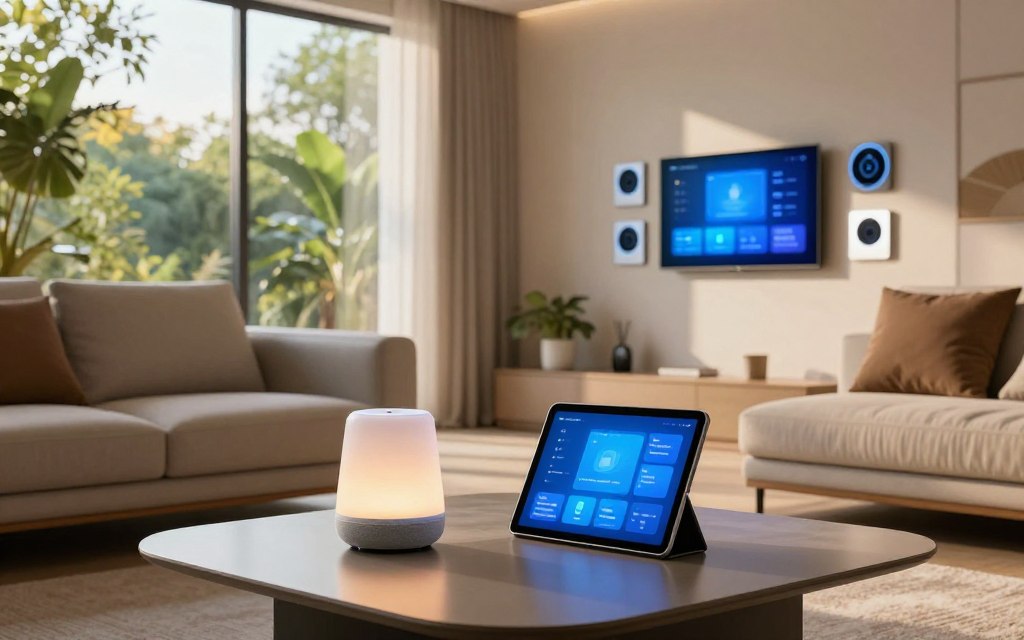
It started with simple gadgets and now supports routines and voice control. This evolution drives current trends and strengthens IoT integration in homes.
Below are the core elements that power connected home trends.
What is Smart Home Technology?
Smart home technology connects devices to perform tasks automatically or on demand. Users control them through apps, voice assistants, or schedules. These systems learn preferences and link with other services for better experiences.
Key Components of Smart Home Systems
Hubs and platforms connect devices. Popular ones include Amazon Alexa, Google Home, Apple HomeKit, and Samsung SmartThings. Network layers use Wi‑Fi, Zigbee, Z-Wave, Thread, and Bluetooth Low Energy for data exchange.
Sensors like motion, door/window, temperature, and humidity provide real-time inputs. Actuators like smart plugs and switches trigger actions. Cameras and doorbells from Ring and Arlo offer home surveillance. Cloud services store history and enable remote access.
Interoperability makes systems more user-friendly. The Matter standard, backed by Amazon, Google, and Apple, aims to simplify compatibility. Open APIs let advanced users link services, while choices between local and cloud control affect latency and privacy.
Security is crucial at every step. Use strong passwords, keep firmware updated, and run segmented home networks. Choose reputable vendors to reduce risk and protect personal data.
| Component | Role | Common Examples |
|---|---|---|
| Hub / Platform | Central control and orchestration | Amazon Alexa, Google Home, Apple HomeKit, Samsung SmartThings |
| Networking | Device communication and range | Wi‑Fi, Zigbee, Z-Wave, Thread, Bluetooth Low Energy |
| Sensors | Detect motion, contact, temperature, humidity | Motion sensors, door/window sensors, temp/humidity sensors |
| Actuators | Execute commands and control power | Smart plugs, smart switches, motorized shades |
| Cameras & Doorbells | Visual monitoring and visitor alerts | Ring, Arlo, Nest cameras and doorbells |
| Cloud & APIs | Remote access, data storage, third-party integration | Vendor cloud services, developer APIs, Matter support |
This foundation gives readers the background needed to follow later topics on voice devices, smart energy, and deeper IoT integration in homes. Understanding these basics makes it easier to see how smart home technology trends and home automation trends will change everyday life.
2. The Rise of Voice-Controlled Devices
Voice control is now a key part of our daily lives. Smart speakers and voice assistants from Amazon, Google, and Apple are leading the way. Echo devices, Nest speakers, and HomePod products are at the forefront. Sonos and Bose offer third-party integrations, while Roku and Samsung bring voice to smart TVs.
Voice assistants manage lights, thermostats, music, timers, and even intercoms. They can handle hands-free calls and set up voice-activated routines. For example, saying “good night” can turn off lights, lock doors, and adjust the thermostat all at once.
Multi-room audio and voice access also make life easier for those with mobility issues.
Popular Voice Assistants in Homes
Amazon Alexa is the top choice with its Echo lineup and wide developer support. Google Assistant is close behind, thanks to its Nest speakers and strong search skills. Apple’s Siri focuses on privacy and works well with HomeKit through HomePod.
Each platform has its own ecosystem, influencing which smart devices people choose for their homes.
Benefiting from Voice Automation
Voice automation makes controlling devices faster and more natural. It can manage scenes across lights, locks, and climate systems, making life more convenient and personalized. Apple and Google have improved local processing, reducing cloud server reliance.
Voice history controls allow users to delete recordings for more privacy. Where you place your device affects microphone range. Voice profiles can tailor responses for different household members.
Setting limits on voice purchasing can prevent accidental orders. Pairing voice control with mobile apps is useful for detailed settings or schedules.
3. Energy Efficiency Through Smart Technology
Smart home tech is changing how we use power and stay comfortable. Small changes can save money, reduce carbon, and make life easier. Here are some practical devices and tips for homeowners.
Smart thermostats from Nest, Ecobee, and Honeywell learn our habits. They use geofencing and remote sensors to save energy. They adjust the temperature based on our schedules and join programs to lower peak energy use.
Studies show these thermostats can save 10–15% on heating and 15% on cooling. Many utilities offer rebates for these smart thermostats. In California, PG&E has rebates. In New York, Con Edison offers deals to lower costs and speed up returns.
Smart lighting includes Philips Hue and LIFX bulbs, smart switches, and sensors. They offer tunable white and dimming to save energy. They also adjust to natural light, reducing unnecessary use.
Automation helps by controlling lights and HVAC based on who’s home. Scenes turn off devices when no one’s around. Schedules match our daily routines, saving energy and extending bulb life.
It’s important to track energy use. Many systems show how much energy we use. This helps us make changes and see the benefits of new home tech.
These tools also help the planet by reducing carbon emissions. Smart thermostats and lighting together are more effective than either alone. They’re key to making homes more eco-friendly.
4. Enhanced Security Features
Smart home security has moved beyond simple alarms. Now, it includes systems that watch, analyze, and alert in real time. Homeowners want cameras, doorbells, locks, and sensors to work together for better protection and easier access.
Smart Doorbells and Surveillance Cameras
Today’s doorbells and cameras from Ring, Arlo, and Nest Cam offer clear video, two-way audio, and motion detection. They catch important events. Features like person detection and package alerts reduce false alarms and send only useful alerts to your phone.
Storage options include cloud subscriptions and local devices. Eufy, for example, uses local storage and edge processing for privacy and to save bandwidth. Edge processing handles basic object recognition, while cloud AI is used for advanced analytics.
Connecting Alarms to Mobile Devices
Smart locks from August, Schlage Encode, and Yale let you lock or unlock remotely. They also create temporary access codes for guests or service workers. Linking locks with doorbells and cameras adds visual verification before granting entry.
Alarm systems and sensors detect smoke, carbon monoxide, water leaks, and glass breaks. Brands like Nest Protect, ADT, SimpliSafe, and Vivint offer these sensors with monitoring plans. Homeowners can choose between professional monitoring for quick emergency response or self-monitoring to save on fees.
Mobile integration provides real-time awareness through push notifications, live video, and automated alerts. Choose systems that support both cloud features and local control for convenience, privacy, and resilience.
Privacy, Placement, and Adoption Tips
Respecting neighbors’ privacy is key when placing outdoor cameras. Check local laws on audio and video recording and have clear storage policies. Look for products with strong encryption and transparent data practices.
For the best coverage, mount cameras at entry points and roofline angles to reduce blind spots. Pair cameras with door and window sensors for layered detection. Choose systems that support IoT integration in homes and match your connected home trends for smooth communication.
When picking gear, consider the benefits of cloud AI versus local processing. Combining trusted brands like Ring, Arlo, and Nest Cam with smart locks and reputable alarm providers creates a flexible, secure setup that adapts to ongoing smart home technology trends.
5. Home Automation: The New Standard
Smart homes are becoming a common part of our lives. People are now more interested in home automation and smart technology. They want systems that let them create their own scenes and control everything with one action.
Creating Personalized Routines
Starting your day can be easier with smart home technology. You can turn on lights, open shades, start your coffee, and adjust the thermostat with just one command. Platforms like Amazon Alexa Routines, Google Home Routines, and Apple HomeKit automation make this possible.
Geofencing helps by setting your home to “away mode” when you leave. This turns off lights and security systems to save energy.
Conditional logic and simple rules engines help fine-tune these routines. You can set triggers like time, motion, or voice commands to start actions. Tools like IFTTT, Home Assistant, and SmartThings make it easy to create complex automations without coding.
Integrating Multiple Devices Seamlessly
Connecting different smart devices is still a big challenge. In the past, devices from different brands used different radios and protocols. This made it hard to set them up together.
The Matter standard is changing this. It aims to make it easier for devices from different brands to work together. This will help create more consistent and reliable smart home systems.
Professional installers like CEDIA integrators can set up whole-home systems. They use wired control and custom scenes for a seamless experience. On the other hand, DIY setups use smart plugs and bulbs to add automation room by room.
Reliability is key. Systems need local control, backup power, and strong Wi-Fi networks. Google Nest Wifi, Eero, and Netgear Orbi help ensure your system works smoothly. Local automation engines and battery backups keep things running even when the internet is down.
It’s important for smart homes to be easy to use. Intuitive apps, simple updates, and features for older adults help everyone enjoy automation. Clear names, easy troubleshooting, and simple steps to create routines keep users happy and confident.
| Focus Area | Typical Tools | Pros | Cons |
|---|---|---|---|
| DIY Automation | Smart plugs, Philips Hue, Wyze, SmartThings hub | Low cost, flexible, easy start | Fragmentation, occasional cloud dependence |
| Professional Installation | CEDIA integrators, wired control systems, Lutron shading | Tuned performance, single-point support, whole-home scenes | Higher upfront cost, longer lead time |
| Rules Engines & Automation | IFTTT, Home Assistant, Alexa Routines | Powerful conditional logic, cross-device chaining | Learning curve for complex flows |
| Interoperability | Matter standard, Zigbee, Z-Wave, native bridges | Smoother cross-platform operation with Matter | Legacy devices may still need bridges |
| Network & Reliability | Google Nest Wifi, Eero, Netgear Orbi, local hubs | Better coverage, local failover options | Requires planning, possible extra hardware |
6. Smart Appliances Revolutionizing Kitchens
Kitchen appliances are changing fast thanks to new home technology. Now, people want devices that save time and cut waste. These smart devices change how we shop and cook.
The best smart appliances offer real value. Samsung Family Hub and LG InstaView refrigerators have cameras and alerts. They help you see what’s inside and reduce food waste.
Smart fridges do more than just track food. They let you pull up recipes and manage energy. They also check for problems early, saving money and time.
Smart ovens and ranges from Samsung let you preheat remotely. June Oven combines cooking methods and sets itself. Wi-Fi coffee makers and Instant Pot models control brewing and cooking through apps.
These devices keep food safe with temperature sensors and alerts. They tell you when your roast is ready. Kitchen cameras and guides help you cook better, reducing mistakes.
Choosing smart appliances means thinking about how they work with other devices. Regular updates keep them working well. It’s important to consider their durability and repairability.
Manufacturers are adding smart features to more appliances. They’re working with platforms like Alexa and Google Assistant. This makes things easier and more compatible as technology advances.
| Appliance Category | Notable Brands / Models | Key Smart Features | Main Benefit |
|---|---|---|---|
| Smart Refrigerator | Samsung Family Hub, LG InstaView | Internal cameras, inventory tracking, expiration alerts, touchscreen, voice integration | Reduce food waste; remote monitoring; energy management modes |
| Smart Oven / Range | June Oven, Samsung Smart Ovens | Guided recipes, remote preheat, automatic cooking modes, app control | Consistent results; time savings; remote operation |
| Multi‑Cooker / Instant Pot | Instant Pot Smart | App-controlled programs, scheduling, recipe libraries | Hands-off cooking; precise timing across dishes |
| Wi‑Fi Coffee Makers | Keurig Smart, Breville IoT models | Remote start, scheduling, strength control via app | Convenience; fresh brew on demand |
| Sous‑Vide / Precision Cookers | Anova, Joule | App temperature control, timers, guided recipes | Consistent doneness; remote monitoring |
7. The Growing Role of IoT in Homes
The Internet of Things is changing how homes work. Simple sensors, smart appliances, and HVAC controllers talk to each other. This network lets homeowners automate tasks and collect useful data.
What is the Internet of Things?
IoT means internet-connected sensors and actuators that exchange data and trigger actions. In a home, examples include motion sensors, smart locks, and fridge monitors. These devices create visibility into daily routines and enable remote control.
Edge processing handles tasks on a local hub for faster response and tighter privacy. Cloud analytics add scalable insights and advanced AI, used by Google Nest and Amazon Ring. Most systems combine local and cloud functions for balanced performance.
Expanding Device Connectivity
Multiple protocols power device links. Wi‑Fi serves high-bandwidth gadgets like cameras. Zigbee and Z-Wave form low-power mesh networks for sensors and switches. Thread offers IP-based mesh with low latency. Bluetooth Low Energy handles short-range personal devices such as wearables.
Home networks must scale as more IoT devices arrive. Strong routers, mesh Wi‑Fi systems, and network segmentation keep bandwidth steady and reduce security risks. Consumers should consider devices from trusted vendors and keep firmware updated.
The ecosystem is broadening fast. Chip makers like Qualcomm and NXP supply silicon, while Amazon, Google, and Apple host platforms that shape smart home technology trends. New startups build niche gadgets such as smart pet feeders and garage controllers.
For homeowners, IoT integration in homes brings convenience and new responsibilities. Privacy and security matter as much as usefulness. Clear interoperability and open standards will guide connected home trends as more people adopt smart living tools.
8. Trends in Smart Health Monitoring
Smart home tech is changing healthcare. Now, devices track vital signs and routines, sharing data with doctors. This helps families feel secure and lets older adults stay independent.
Wearables and home health devices connect with big platforms. The Apple Watch and Fitbit trackers send heart rate and sleep data to Apple Health or Google Fit. Smart scales and blood pressure cuffs also sync automatically.
Fall-detection sensors alert caregivers to sudden events. This keeps everyone safe.
Sharing health data helps track trends over time. Aggregators show patterns, not just single readings. But, it’s important to keep medical data private.
Remote healthcare is growing with these tools. Telehealth visits can include monitoring of vital signs and medication reminders. This helps manage chronic diseases and reduce hospital readmissions.
Solutions for aging in place support independent living. Devices like motion sensors and smart pill dispensers offer safety. They let seniors live freely while caregivers stay informed.
Reimbursement and regulation are key to adoption. Medicare and private insurers now cover remote monitoring. Clear policies help doctors use these devices.
Security and ethics are crucial. Data must be transmitted securely, and users must give informed consent. Designers should focus on privacy in IoT and connected home trends.
9. The Influence of AI on Smart Homes
Artificial intelligence is changing how homes work. Now, smart homes can predict needs, save energy, and make life easier. This change is making homes more convenient and cost-effective.
Voice platforms like Amazon Alexa, Google Assistant, and Apple Siri understand us better. They can do many things at once, like manage our schedules and control devices. This is a big step forward in smart home technology.
Thermostats, like Nest, learn our habits to save energy. Lights adjust to our routines, saving energy without losing comfort. They also warn us about appliance problems before they get worse.
Cameras are getting smarter with AI. They can recognize people, find packages, and track activities. This is thanks to edge AI chips that make things faster and more private.
AI is even learning to understand our emotions. It can change the lights, temperature, or music based on how we feel. But, this raises questions about privacy and how we want to be treated.
Systems are getting better at balancing comfort and cost. They use weather forecasts, energy prices, and how busy we are. This shows how smart homes are becoming more efficient and sustainable.
Developers have many tools to make homes smarter. They can use cloud services or on-device frameworks. This helps bring new ideas to smart homes faster.
But, there are risks like biased AI and unexpected behavior. It’s important to make sure users have control and can understand how AI works. This keeps our homes safe and trustworthy as technology advances.
| Area | Current Use | Near-Term Impact | Tools/Examples |
|---|---|---|---|
| Voice Interaction | Natural language commands, routines | More proactive assistance, multi-step tasks | Amazon Alexa, Google Assistant, Siri |
| Personalization | Thermostats and lighting that learn | Higher comfort with lower energy use | Nest, Ecobee, Philips Hue |
| Computer Vision | Person and package detection | Improved security and context-aware actions | Nvidia Jetson, Apple Neural Engine |
| Energy Optimization | Automated scheduling and load shifting | Cost savings and grid-friendly behavior | Utility APIs, weather feeds, ML models |
| Developer Ecosystem | Cloud and on-device ML tools | Faster innovation and integrations | AWS, Google Cloud, Azure, TensorFlow Lite, Core ML |
| Ethics & Safety | Privacy settings and user controls | Stronger transparency and explainability | Model audits, user dashboards |
10. Environmental Impacts of Smart Homes
Smart home technology is changing how we live and affect the planet. Small changes can make a big difference. With smart thermostats, efficient lighting, and smart appliances, we can use less energy and reduce emissions.
Smart technology and sustainability go hand in hand. Smart thermostats can save 10–12% on heating and 15% on cooling. LED lights with smart controls can cut lighting energy by 50–70% compared to old bulbs.
Energy monitoring lets families spot and fix waste quickly. This helps us use energy more wisely.
Smart tech also helps with energy efficiency. Smart EV chargers and vehicle-to-grid systems support off-peak hours. This helps stabilize the grid and lower emissions.
Choosing the right materials and products is key for sustainability. Electronics have carbon and create waste. Opt for durable, repairable devices and recycle when possible.
Using renewables with storage boosts benefits. Solar systems with storage and smart inverters optimize energy use. Companies like Tesla, SolarEdge, and Enphase help homeowners use more solar power.
Tracking progress is important. Smart energy dashboards and APIs like Green Button help monitor energy use. Seeing results motivates homeowners to improve their efficiency.
Supportive policies and incentives help adopt greener tech. Tax credits, rebates, and incentives lower costs. These programs encourage the use of energy-efficient devices and EV charging.
| Device | Typical Energy Savings | Environmental Benefit |
|---|---|---|
| Smart Thermostat (Nest, ecobee) | 10–15% on HVAC | Lower heating and cooling emissions |
| Smart Lighting (LED + controls) | 50–70% on lighting | Reduced electricity demand and bulbs waste |
| Smart EV Charger (time-of-use) | Variable—more savings with off-peak charging | Shifts demand, supports grid decarbonization |
| Solar + Storage (Powerwall, Enphase) | Reduces grid draw by maximizing self-use | Cuts scope 2 emissions and peak load |
Smart home tools don’t solve all environmental issues, but they help. Making smart choices and managing energy wisely leads to lasting sustainability gains.
11. The Future of Smart Home Technology
The next big thing in smart homes is better compatibility and stronger privacy. Matter and Thread mesh networks will make it easier to set up devices. This way, products from Google, Apple, and Amazon will work together smoothly.
Local AI will also play a big role. It will handle tasks on the device itself. This will reduce latency and keep your data safe.
Upcoming Trends to Watch
Soon, everyday items will have built-in smarts. Think smart glass, smart HVAC systems, and smart refrigerators. These devices will be connected but won’t look out of place in your home.
Service models will change too. ISPs and utilities will offer smart services and subscriptions. Brands like Nest and Ecobee will provide advanced features.
Demographics and social changes will influence home tech. An aging population will need remote care and telehealth. More people working from home will want better noise control and office environments.
Climate concerns will also shape smart home tech. Homes will focus on saving energy together. This will lead to big reductions in energy use.
Predictions for the Next Decade
In the next ten years, expect solved interoperability and local AI for smart homes. Telehealth will also become more common. Homes that focus on networking and security will see the most benefits.
Make sure your Wi-Fi is strong. Choose devices that support local processing. Plan upgrades for energy savings and health monitoring. This will make your home more comfortable, secure, and convenient.